
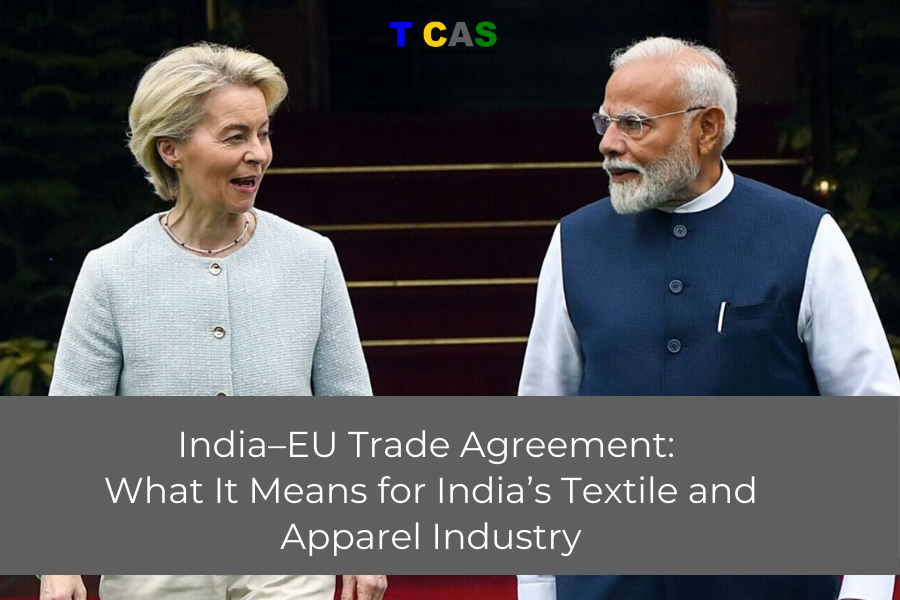
India–EU Trade Agreement: What It Means for India’s Textile and Apparel Industry
India’s textile and apparel sector is entering a phase of gradual but meaningful change as global trade dynamics shift. Evolving supply chains, rising sustainability expectations, and changing geopolitical priorities are influencing how and where global brands source their products. In this backdrop, the proposed India–EU Trade Agreement could play an important role in shaping the future direction of the industry.
The European Union represents one of the largest and most quality-conscious markets for textiles and apparel globally. For India, which has a well-established manufacturing ecosystem and a wide range of textile capabilities, a comprehensive trade agreement with the EU offers the possibility of deeper market access, stronger trade relationships, and long-term growth opportunities, alongside certain operational and regulatory challenges.
As negotiations around the agreement progress, it becomes important for industry stakeholders to understand its potential implications. From exporters and manufacturers to policymakers and investors, clarity on how the agreement could impact competitiveness, compliance, and market positioning will be key to making informed strategic decisions.
The Importance of the EU Market for India’s Textile Sector
The textile and apparel industry is one of India’s oldest and most employment-intensive sectors. It contributes significantly to exports, industrial output, and rural employment. The European Union has consistently been among India’s top export destinations for garments, home textiles, and made-ups.
However, Indian exports to the EU currently face higher tariffs than those of countries such as Bangladesh, Vietnam, and Cambodia, which enjoy preferential access under existing trade arrangements. These tariff differentials directly impact price competitiveness and sourcing decisions by European buyers.
The India–EU Trade Agreement aims to address these structural barriers and create a more balanced trade framework.
Key Objectives of the India–EU Trade Agreement
At its core, the trade agreement seeks to strengthen bilateral economic ties by reducing tariffs, improving market access, and aligning regulatory standards. For the textile and apparel industry, the agreement is expected to focus on:
- Reduction or elimination of import duties on textiles and garments
- Improved access to EU markets for Indian exporters
- Stronger cooperation on sustainability and compliance standards
- Enhanced investment and technology collaboration
These objectives, if implemented effectively, could mark a turning point for India’s textile exports to Europe.
Expected Impact on Export Competitiveness
One of the most direct benefits of the trade agreement would be improved price competitiveness for Indian textile and apparel products. Lower tariffs would help Indian exporters offer more competitive pricing to European buyers without compromising margins.
This could lead to increased sourcing from India, particularly in categories where the country already has strengths, such as cotton garments, home textiles, handicrafts, and value-added apparel.
Over time, improved competitiveness may also help India regain market share lost to other low-cost or preferential-access countries.
Opportunities for Value-Added and Premium Segments
The EU market is increasingly driven by demand for high-quality, sustainable, and ethically produced textiles. While price remains important, European consumers and brands are increasingly emphasising transparency, traceability, and environmental responsibility.
The trade agreement could encourage Indian manufacturers to move up the value chain by focusing on design-led products, technical textiles, and sustainable apparel. Companies that invest in certifications, cleaner production processes, and compliance systems are likely to benefit the most.
This shift toward value-added exports can help improve profitability and reduce dependence on volume-driven growth.
Impact on Manufacturing and Supply Chain Strategies
Global brands are actively seeking to diversify their sourcing base to reduce supply chain risks. India’s integrated textile ecosystem, from fibre and yarn to fabric and finished garments, offers a unique advantage in this context.
With improved trade terms, India could emerge as a preferred sourcing destination for European brands looking for reliability, scale, and compliance. This may lead to:
- Increased capacity expansion in garment manufacturing
- Greater adoption of automation and advanced technologies
- Improved supply chain integration and efficiency
- In the long term, these developments could strengthen India’s position as a global textile hub.
Compliance, Sustainability, and Regulatory Challenges
While the India–EU Trade Agreement opens doors, it also raises the bar for compliance. The EU has stringent regulations related to environmental standards, labor practices, chemical usage, and product traceability.
Indian exporters will need to align with evolving EU policies on sustainability and corporate due diligence. This may involve additional costs and operational changes, particularly for small and medium-sized enterprises.
However, businesses that proactively adapt to these requirements can turn compliance into a competitive advantage, building trust with European buyers and consumers.
Employment and Economic Implications
The textile and apparel industry is a major source of employment in India, especially for women and semi-skilled workers. Increased exports driven by better access to EU markets could lead to job creation across manufacturing hubs.
Beyond direct employment, growth in textile exports would have multiplier effects on allied sectors such as logistics, packaging, dyes and chemicals, and technology services. At a broader level, stronger export performance would contribute to foreign exchange earnings and overall economic stability.
Strategic Role of Market Research and Industry Intelligence
Successfully leveraging the India–EU Trade Agreement will require informed decision-making backed by data and market intelligence. Businesses need to understand evolving consumer preferences, competitive benchmarks, and regulatory landscapes within the EU.
Market research plays a critical role in identifying high-potential product categories, optimal pricing strategies, and target geographies within Europe. For industry stakeholders and policymakers, research-driven insights help assess risks, monitor impact, and refine export strategies. Without a clear understanding of market dynamics, the benefits of the trade agreement may remain underutilized.
Long-Term Outlook for the Textile and Apparel Industry
Over the long term, the India–EU Trade Agreement could act as a catalyst for meaningful transformation within India’s textile and apparel industry. Improved access to a demanding yet high-value market like the EU may encourage manufacturers to strengthen quality standards, adopt sustainable practices, and invest in advanced technologies.
However, the overall impact will depend on how effectively the agreement is implemented and how prepared the industry is to adapt. Supportive domestic policies, infrastructure development, and close collaboration between government bodies, industry associations, and research institutions will play a crucial role in translating policy intent into measurable outcomes.
Conclusion
The India–EU Trade Agreement goes beyond tariff reductions or trade facilitation measures. It has the potential to enhance export competitiveness, promote value-added manufacturing, support supply chain diversification, and generate employment across the textile ecosystem.
For businesses that are willing to evolve with market expectations and regulatory requirements, the agreement could open doors to sustained growth in one of the world’s most sophisticated consumer markets. In an increasingly complex global trade environment, strategic planning backed by market intelligence will determine how effectively the industry converts this opportunity into long-term success.